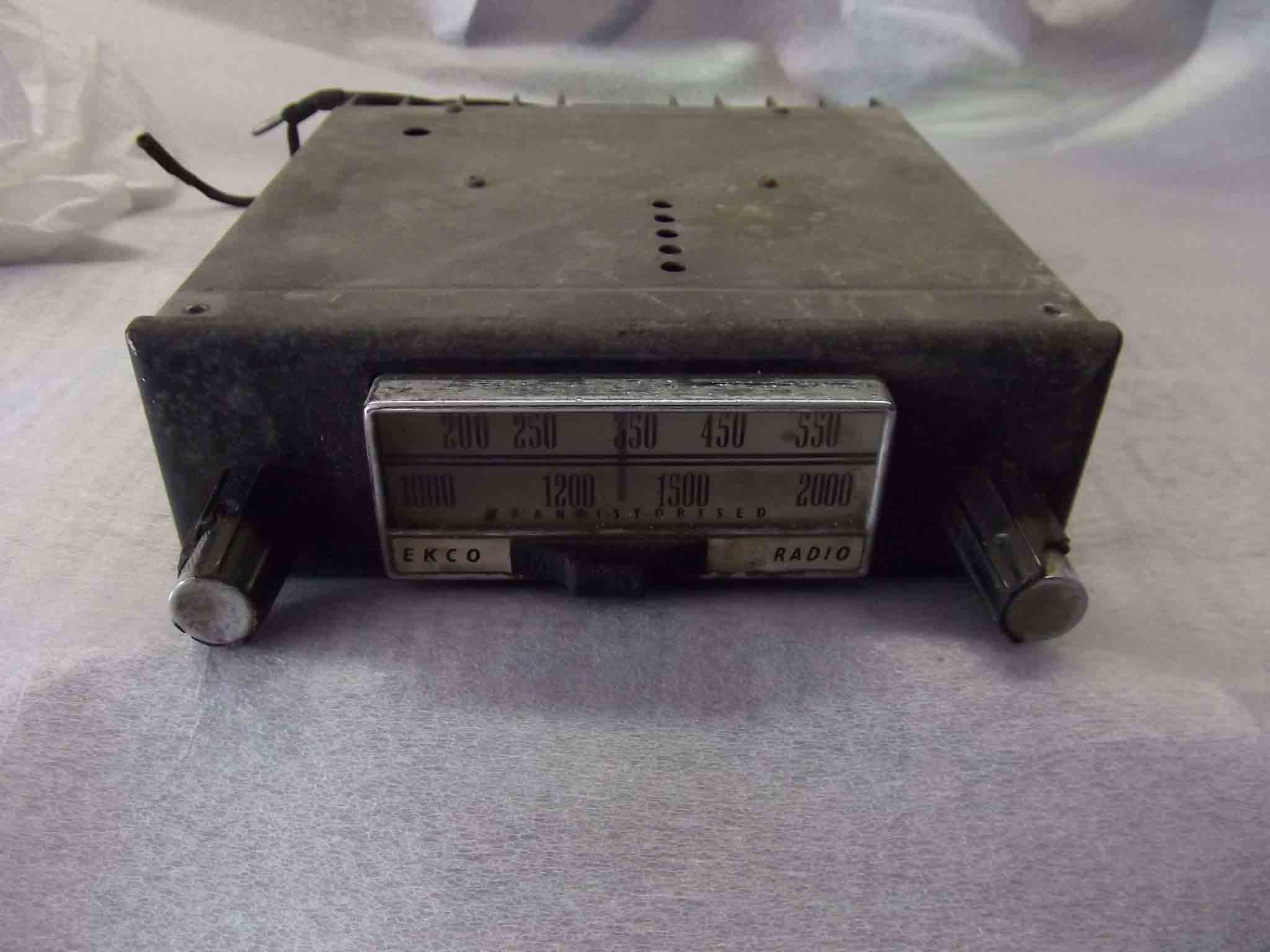


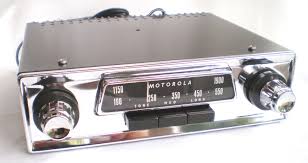
The Humble Car Radio
Parece que los autos siempre han tenido radios. Not so. I’ll tell you a story.
Una noche, en 1929, two young men, William Lear and Elmer Wavering drove their girlfriends to a lookout point high above the Mississippi River town of Quincy, Illinois, para ver el atardecer. A romantic night to be sure, pero una de las mujeres observó que sería aún mejor si pudieran escuchar música en el auto. Typical! A Lear y Wavering les gustó la idea. Ambos hombres habían jugado con radios (Lear had served as a radio operator in the Navy during World War I) y no pasó mucho tiempo antes de que desarmaran una radio doméstica y trataran de hacerla funcionar en un automóvil. Not as easy as it sounds. Cars had ignition systems, generadores, bujías, and other electrical equipment that generate noisy interference, almost impossible to listen to the radio with the engine running. Uno a uno, Lear y Wavering identificaron y eliminaron cada fuente de interferencia eléctrica. Cuando finalmente consiguieron que su radio funcionara, lo llevaron a una convención de radio en Chicago. Allí se encontraron con Paul Galvin, propietario de Galvin Manufacturing Corporation. He made a product called a “battery eliminator”. A device that allowed the old battery-powered radios to run on household AC current. As more homes were getting wired for electricity, radio manufacturers were now making more AC-powered sets. Galvin necesitaba un nuevo producto para fabricar. Cuando conoció a Lear y Wavering en la convención de radio, Lo encontró. Él creía que producido en masa, las radios de automóviles asequibles tenían el potencial de convertirse en un gran negocio.
Lear y Wavering se instalaron en la fábrica de Galvin. When they had perfected their first radio, lo instalaron en su Studebaker. Galvin went to a local banker to apply for a loan. Pensando que podría endulzar el trato, hizo que sus hombres instalaran una radio en el Packard del banquero. Half hour after the installation, el Packard del banquero se incendió (They didn’t get the loan).
Galvin no se rindió. Condujo su Studebaker casi 800 millas a Atlantic City para mostrar la radio en el 1930 Convención de la Asociación de Fabricantes de Radio. Demasiado roto para pagar una cabina, estacionó el auto afuera del salón de convenciones y encendió la radio para que los congresistas que pasaban pudieran escucharlo. Esa idea funciono. Recibió suficientes órdenes para poner la radio en producción..
At today’s cost, una radio para un auto nuevo costaría aproximadamente $3,000. En 1930 it took two men several days to fit a car radio. The dashboard had to be taken apart so that the receiver and a single speaker could be installed and the roof had to be cut open to install the antenna. Estas primeras radios funcionaban con sus propias baterías, so holes had to be cut into the floorboards to accommodate them.
The installation instructions run to 28 pages! Venta de radios de automóviles complicados que cuestan 20% of the price of a brand-new car wasn’t easy in the best of times, mucho menos durante la Gran Depresión. Galvin lost money in 1930 and struggled for a couple of years.
Pero las cosas se recuperaron en 1933 when Ford began offering their radios pre-installed at the factory. En 1934 they got another boost when Galvin struck a deal with Goodrich Tyre company to sell and install them in its chain of tyre stores. Para entonces el precio de la radio, installation including, había caído a $55. The Motorola (a play on the name of the record company Victrola) car radio was up and running.
Mientras tanto, Galvin continuó desarrollando nuevos usos para las radios de automóviles. En 1936, he introduced push-button tuning! Then introduced the Motorola Police Cruiser, una radio de automóvil estándar que fue preajustada de fábrica a una sola frecuencia para captar transmisiones policiales.
En 1940 he developed the first hand-held two-way radio. The Handie-Talkie for the US. Ejército.
A lot of the communication technologies that we take for granted today were born in Motorola labs in the years that followed WW II. En 1947 salieron con el primer televisor para vender bajo $200. En 1956 la compañía presentó el primer buscapersonas del mundo. En 1969 they supplied the radio and television equipment that was used to televise Neil Armstrong’s first steps on the Moon. 1973 they made the world’s first hand-held cellular phone, then one of the largest cell phone manufacturers in the world. All started with the car radio.
What ever happened to the two men who installed the first radio in Paul Galvin’s car, Elmer Wavering y William Lear? They took very different paths in life. Wavering se quedó con Motorola. En la década de 1950, ayudó a cambiar la experiencia del automóvil nuevamente cuando desarrolló el primer alternador automotriz, replacing inefficient generators. The invention led to such luxuries as power windows, asientos eléctricos, y, finalmente, aire acondicionado.
Lear también continuó inventando. He held more than 150 patentes. Recuerda reproductores de cintas de ocho pistas! Pero por lo que es realmente famoso son sus contribuciones al campo de la aviación.. Inventó los buscadores de dirección de radio para aviones, aided the invention of the autopilot, designed the first fully automatic aircraft landing system and in 1963 presentó su invento más famoso de todos, el Lear Jet, el primer mundo producido en masa, jet de negocios asequible. Not bad for a guy who dropped out of school after the eighth grade. What ever that is.
Seth Pittham Zeta Services