

El bueno de Charley Watkins
si como yo, Creciste en los años 60 y 70., escuchar musica y tocar en bandas, Sin duda estará familiarizado con el nombre del equipo electrónico Watkins Electric Music.. Charley preparó el escenario (sin juego de palabras), lanzando a muchos músicos al estrellato.
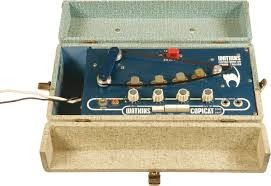
Había dos vías principales para el legado de Charley.. uno era el sistema de megafonía y amplificadores de guitarra., el otro era el famoso 'Copicat', una unidad de reverberación de cinta. Hablaré del Copicat aquí, y en un próximo artículo, Te aburre con su P.A.. diseños de sistemas.
Nació en 1923 en el sur de Londres, Charley creció en Battersea. Una infancia un poco dura., Terminó alistandose en la Marina Mercante., donde logró sobrevivir a muchos viajes durante la Batalla del Atlántico. uno de los afortunados 25% que sobrevivió. Durante este tiempo, escuchó a alguien tocar un acordeón. Le gustó tanto que se compró uno y jugó profesionalmente en Londres..
En el 49, entró en el negocio con su hermano Reg. y tenía una tienda en Balham High Road, venta de discos y guitarras. registro, un ebanista, diseñó y construyó una guitarra de cuerpo sólido, llamado el estoque. Charley, por otro lado, prefería trabajar en la parte trasera del taller haciendo amplificadores.. el construyo 20 Unidades que fueron diseñadas para su uso con suministro de red de CA o CC.. DC era peligroso, pero muchas zonas todavía recibieron este suministro. Tenía una forma de matar accidentalmente a los guitarristas., Entonces Charley los recordó todos para modificarlos..
En el 58 Charley escuchó una canción del italiano Marino Marini.. Le gustó el efecto de eco vocal.. Para obtener esto, En realidad, solo se podía hacer en el estudio de grabación con una o dos grabadoras grandes de bobina a bobina.. Sabía que había una máquina de eco fabricada en Italia que utilizaba un tambor magnético.. Era caro y poco confiable.. Charley tuvo la idea de utilizar un bucle de cinta para grabar audio en, que podría repetirse hasta el infinito. Conociendo sus limitaciones técnicas, contrató a un ingeniero, Bill Perkins. Trabajaron en una máquina que consistía en un bucle de cinta que podía funcionar a velocidad variable.. El audio fue grabado por el primer cabezal y luego recogido por uno o más de los tres cabezales restantes a medida que la cinta pasaba una fracción de segundo después.. Varios controles le permitieron mezclar las diferentes señales con diferentes niveles., borrar una vez escuchado, o se le permite continuamente volver a grabar (sostener) dando un maravilloso sonido de la era espacial. Charley admitió que hubo varios malos diseños electrónicos con la máquina, permitiendo que se distorsione. sin embargo, este sonido se volvió amado por sus usuarios y productores discográficos.. Ahora, Por primera vez, bandas y músicos pudieron recrear el sonido del eco en vivo en el escenario y en pequeños montajes., que sólo se les podría haber permitido en grandes estudios caros.
Para el 62 W.E.M había construido 100 unidades y ponerlas a la venta en la tienda de Battersea. Estos tenían un precio de 38 libras más impuestos. dentro de un día, todos se vendieron y la producción tuvo problemas para mantenerse al día.. La primera máquina vendida a Johnny Kid de Johnny and the Pirates. Así va, Shakin' all over fue el primer éxito del Reino Unido en utilizar Copicat con su creación de sonido distintiva.. Fue un gran éxito y los pequeños estudios, como el de Joe Meaks encima de una tienda de bolsos en Kensington. La máquina se utilizó aquí para grabaciones como Telstar de los Tornados, etc..
en un momento, la producción estaba funcionando a 1000 unidades al mes. Estas máquinas estaban basadas en válvulas y aparte de la instalación de eco, Podrían usarse como preamplificador para guitarras.. Con la configuración de control en la posición “incorrecta”, La distorsión le dio a los jugadores una profundidad adicional al sonido que les gustaba.. Esto se debió a uno de los aspectos de diseño defectuoso mencionados anteriormente..
Las versiones posteriores eran similares., todavía usando bucles de cinta pero estaban transistorizados. Algunos puristas decían que el sonido nunca volvió a ser el mismo. Sin embargo no se detuvo 100,000 en venta y gente como Blackmore, Lizzy delgada, Monos árticos, A todos los artistas de reggae les encanta el sonido que les dio..
A medida que la tecnología avanzó, máquinas similares estuvieron disponibles en Japón. Roland hizo algunas variaciones muy finas con bucles de cinta de muchos pies de largo., durando más. nosotros. Vi que esto sucedía y se desvaneció la producción..
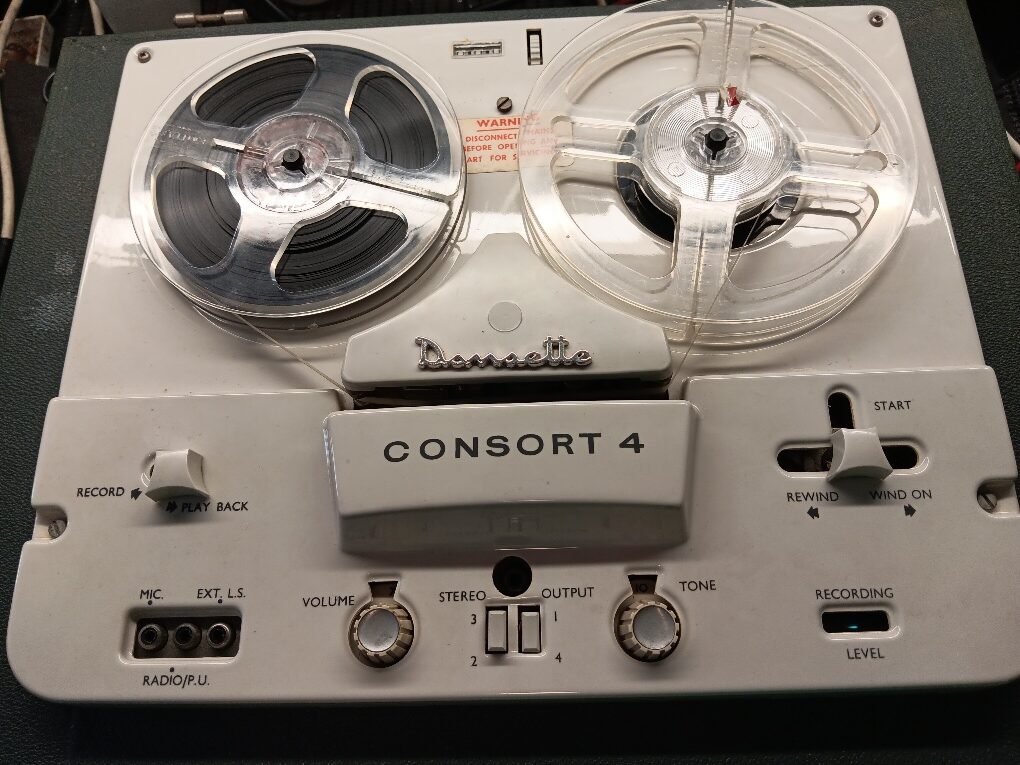
He reparado muchas de estas máquinas y todas tienen una agradable sensación de "hecho en casa".. Tuve la suerte de encontrarme con Charley varias veces.. como yo, él era modesto, corto, calvo y miserable.
Así que la próxima vez que escuches Shakin' en la máquina de discos, mirar hacia arriba y decir gracias.
Now for the P.A. side.
Charlie realised that whilst instruments at that time had amplification, singers etc. struggled to be heard. Most sound enforcement systems were Tannoy type horns which were horrid to listen to. So he went about making a system aimed at a truthfully amplifying the human voice. He did this buy building speaker cabinets fitted with Goodman Axium 301 model drivers. These units were used in HiFi systems and sounded sweet.
Watkins supplied a trial system the Rock group, the Byrds. But it failed and lead to a bit of barney. Undeterred, Charlie redesigned the system, resulting in an amplifier which became a bench standard, the WEMSL 100. This was a 100 Watt slave amplifier, 10 of which would be linked together. It was a sort of copy of an American RCA product using Germanium transistors. These amps along with the large multi-speaker columns sounded great! From the mid ‘60s to the mid ‘70s, WEM was the go-to P.A. system. This put the little factory in Offley Road London SW6 on the map.
Watkins Also designed a portable mixing console. 5 channels, reverberación, equalization and feeds to slave amplifiers and monitors. 2 could be linked together if needed. These also provided an output to a foldback loudspeaker, which allowed the performer to hear themselves. This invention was as a result of Jimmy Hendrix playing at a concert, unable to hear himself. Charlie turned around an audience facing speaker, pointing at Hendrix. Problem solved. The “Fold-back” was born.
Charlie wanted to muscle in on “big events”. He wanted to get his equipment at the isle Of Whight Windsor Blues Festival in ’67. The promoter told Watkins he could supply the PA, for free and take responsibility for it all. He did and it was a great success. Loads of speaker cabinets and his WEMSL100s giving 1000Watts. Which in those days was massive. It even resulted in Watkins being arrested for breach of the peace!
In ’69, the Rolling Stones played at their famous Hyde Park concert. Here Watkins supplied another massive system, totaling just under 2,000 Vatios. It was a great success and further more boosted the manufacturing of hundreds more WEM systems. The Stones wrote a lovely letter to Charlie, thanking him for a great sound.
By the early ‘70s Watkins saw a change in the requirement for concerts. More volume was always required. Charlie’s method of just adding amplifiers and more cabinets was flawed. As the Sound-man for the group The Who said, otro 1,000 Watts gives you only 2 decibels extra. Keep adding equipment means more transport costs, more supporting staff, more weight. Watkins also had a moral issue with the amount of volume being generated which could damage hearing. He actually paid for a Harley Street consultant for advice on this. His fears were confirmed. He also disliked the change taking place at concerts. What used to be cool friendly events, were now taking on a violent aspect.
There was a new loudspeaker technology coming on to the market. P.A. companies were using folded Horn designs. This type of speaker cabinet allowed the sound energy to be far more directional, aiming at the audience. Watkins Column speakers were great for audio quality, but radiated audio over a wide area, wasting energy and consuming a large foot print. The Loaded Horn speakers were able to provide the same audio coverage at a fraction of the power required. Staff and transport costs were therefore reduced. en adición, there was a move away from bands owning their own equipment and sound guys. Hire companies were becoming common place, proving staff, equipment when and as required. Charlie saw this happening and could not and didn’t want to compete. By ’74, things were winding down and the output from the factory in SW6 was a shadow of what it had been.
The legacy however lives on. WEM equipment on the second-hand market holds high values. The little WEM dominator guitar amplifiers can fetch up to 1,000 quid or more. Noel Gallagher loves his and used it on his studio recordings. The original WEM Copicat reverb units are equally prized.
Asi que, ahí lo tenemos. A diminutive unassuming chap in South London, loved by the Rock Stars, left his stamp on history with his ideas of quality sound reinforcement and the Copicat Echo machine. It was nice chatting with you in the early ‘80s. Meet again one day.
Seth. servicios zeta. Trabajando duro para ti.
Seth, servicios zeta. Trabajando duro para ti.