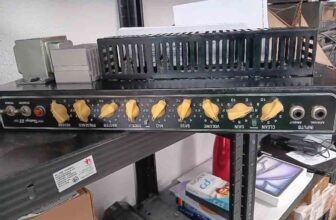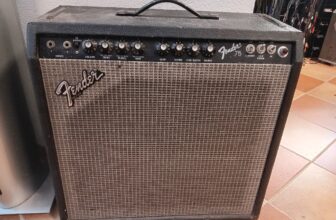


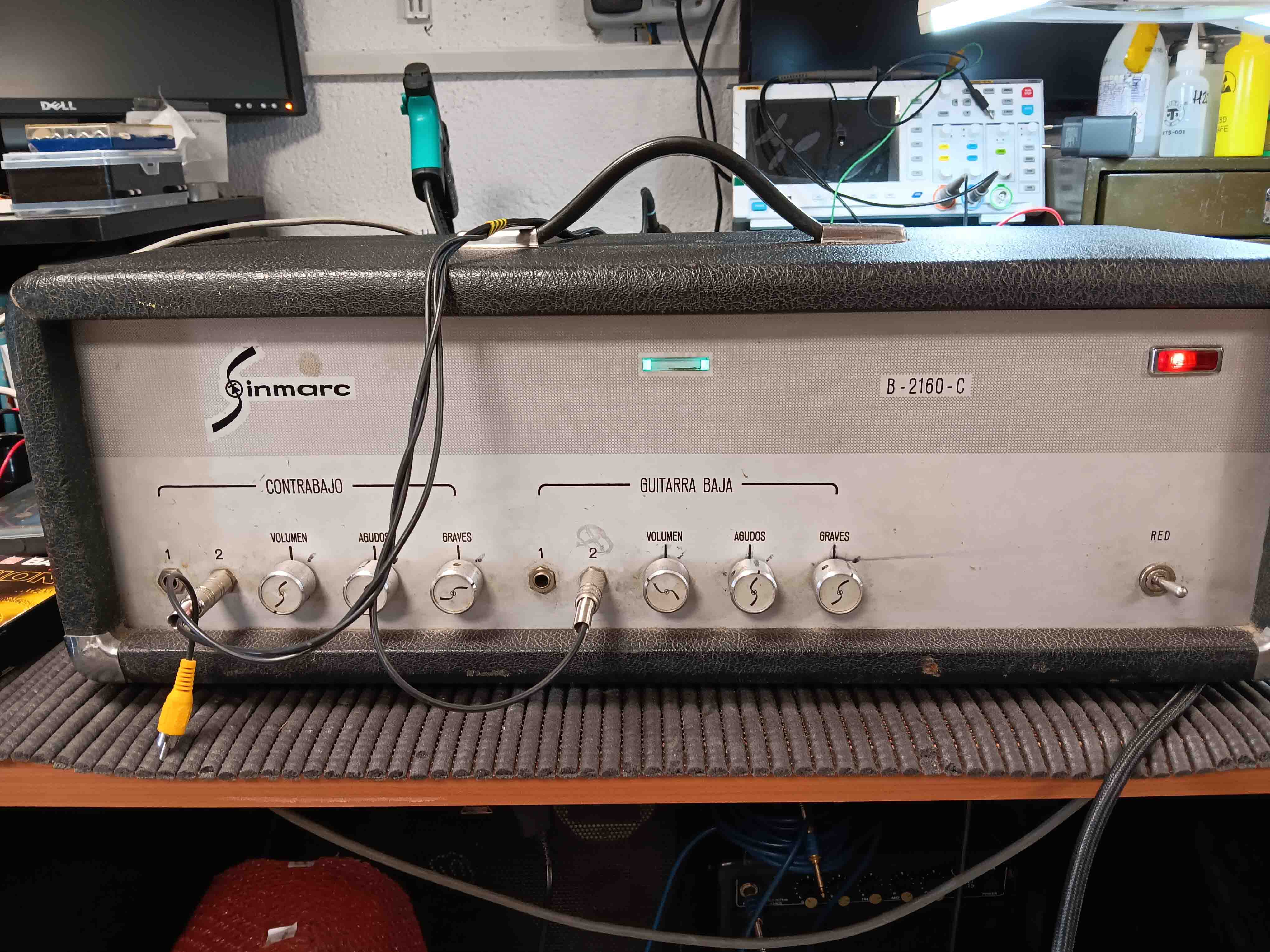
Anyone who following my little channel will know that I have a real soft spot for these Sinmarc amplifiers. Made in Barcelona, blatant copies of Fender amplifiers, they are very nice. They sound great, as would its Fender parent and, made well. Big transformers and the best of components available at the time. I reckon these date to around 1970s something like that. What I do like, is the addition of a magic eye (EM84) which is adjusted to show when the amplifier is clipping, or if the bass player is deaf. This particular version is a copy of a Fender Bassman.
A friend of a long standing client brought this in as it was making an awful noise on channel 2. The amplifier, not the friend. Supposedly it had been fully restored by a “Luthier expert”, but he had not been able to locate the cause of the noise. I thought a Luthier put strings on guitars, but I may be wrong?
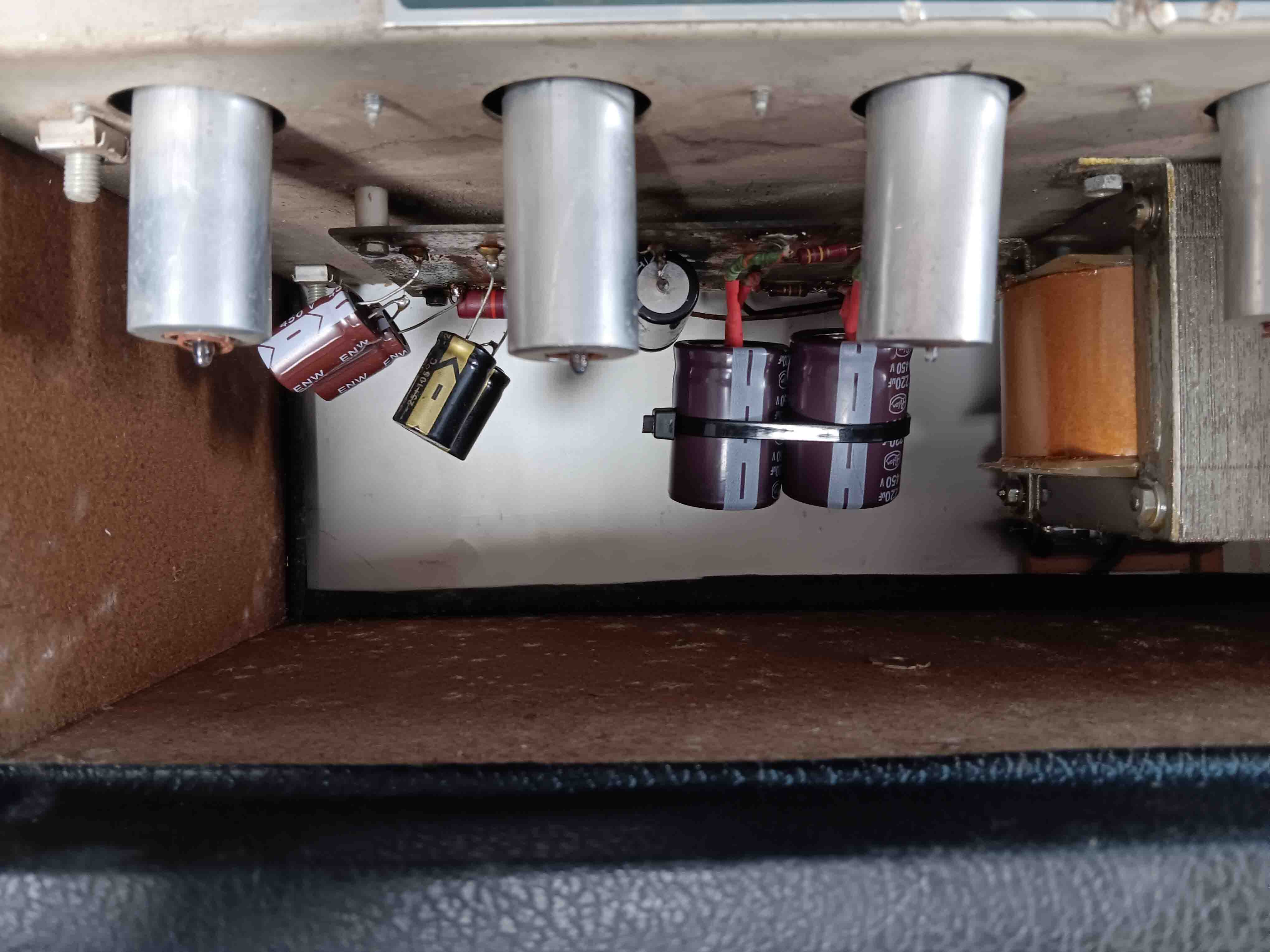
Taking the back cover off, the first thing that you could see was a bird’s nest of hanging electrolytic capacitors. These would normally be fitted to a board on the chassis. They had been replaced, badly soldered and not secures other than bits of thin wire connecting them. Some capacitors had been replaced with lower voltage rating ones connected in series, with no voltage balancing resistors were fitted.
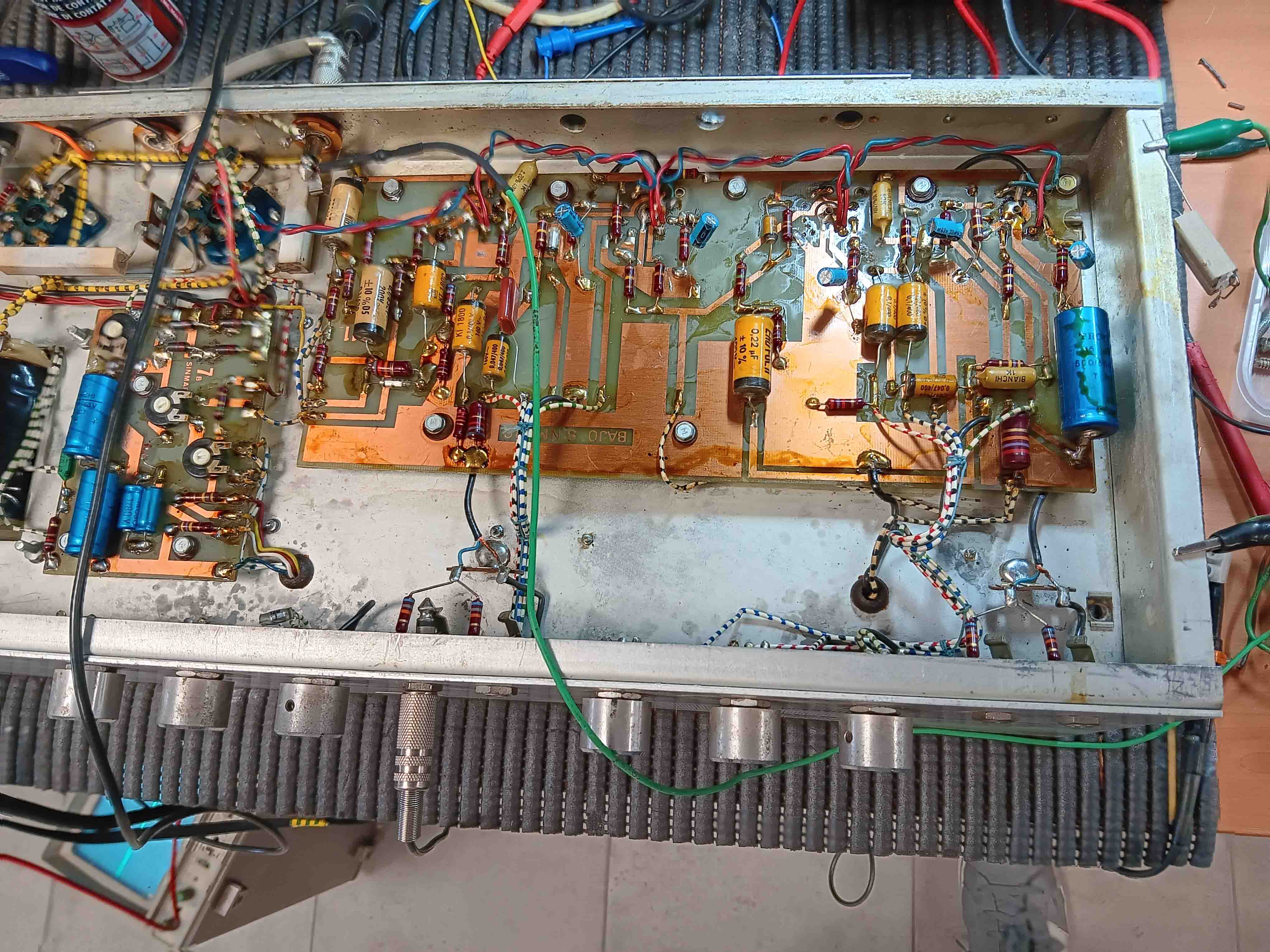
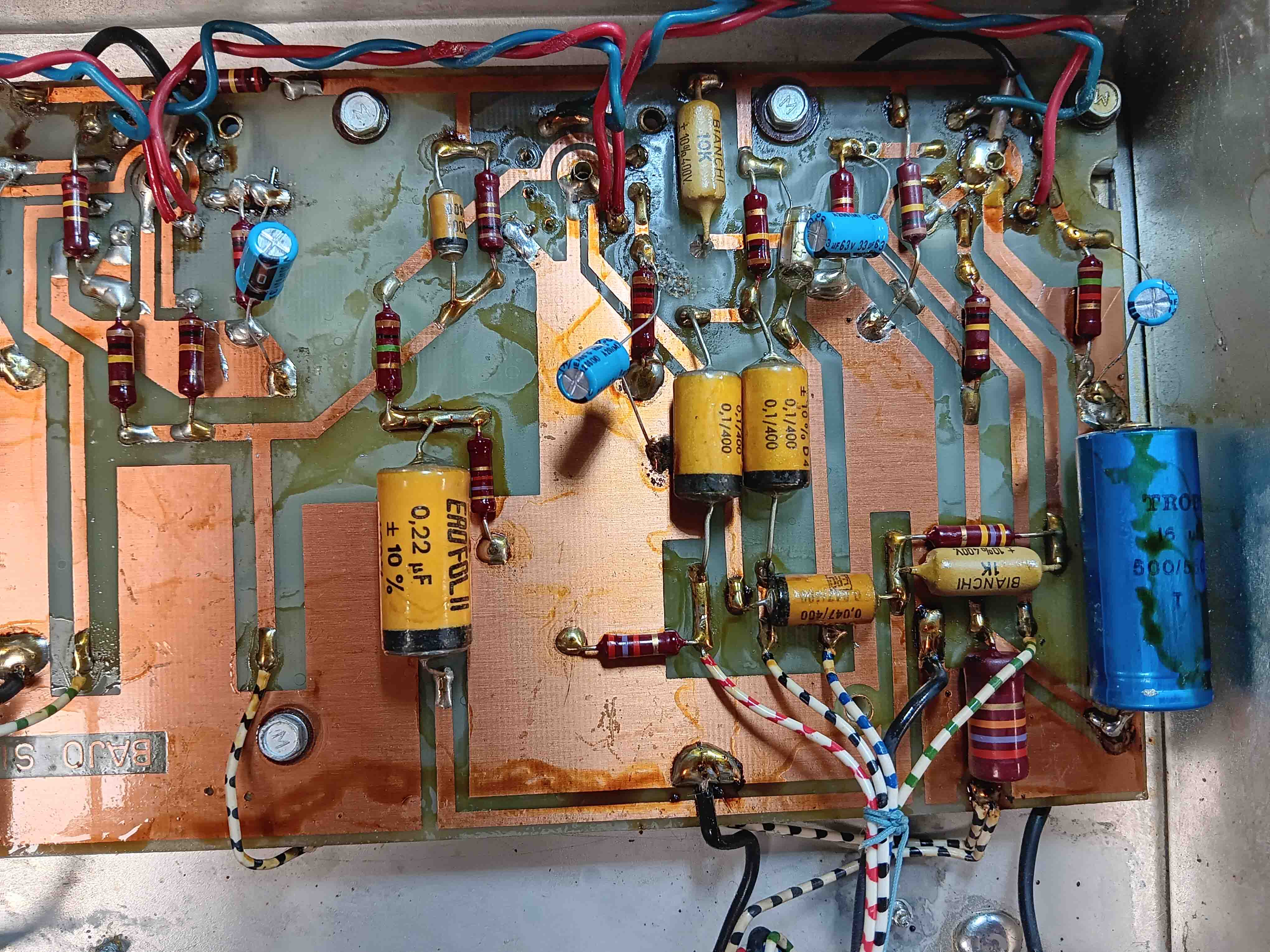
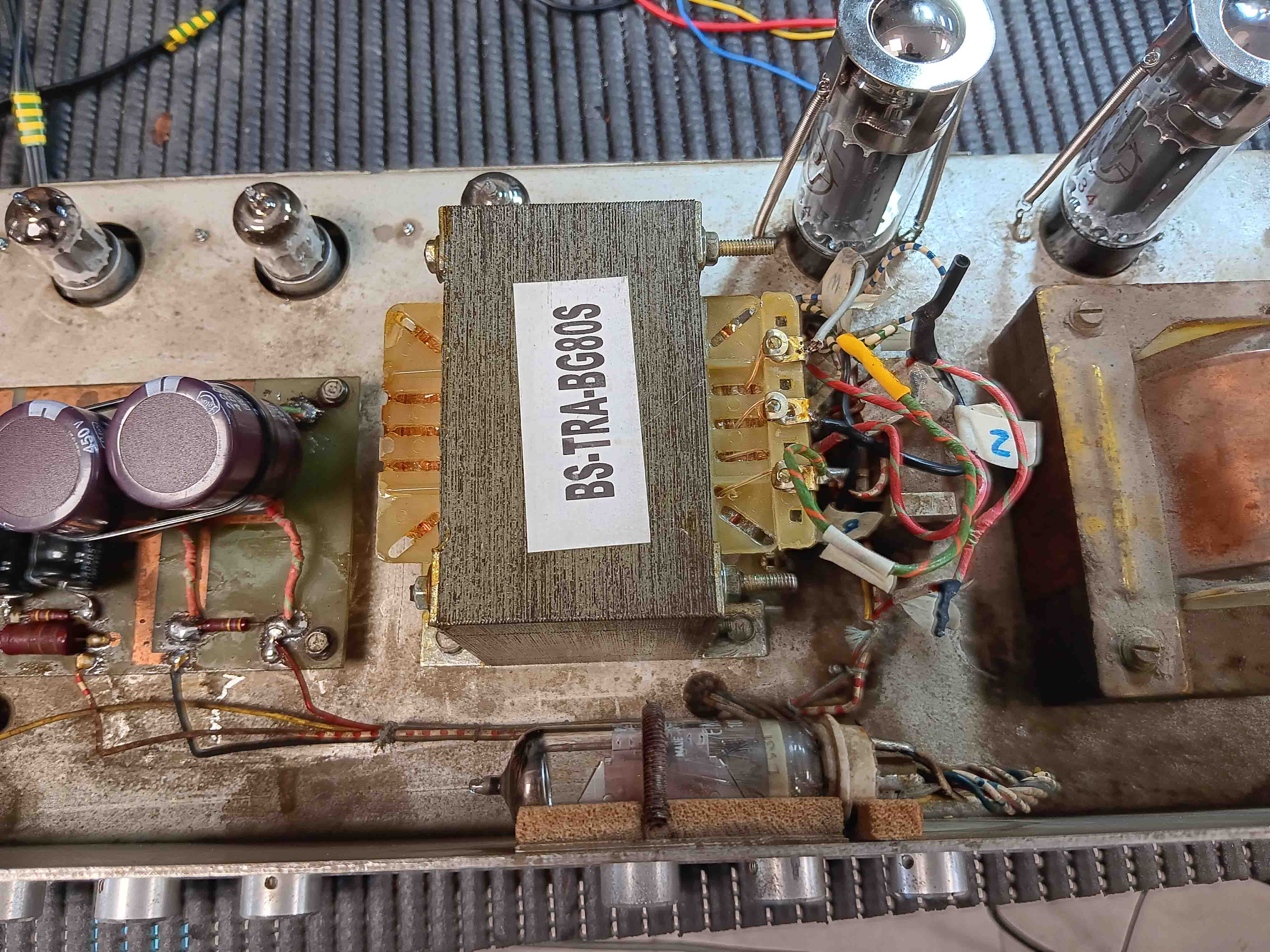
All this mess had to be cleared up as, in my opinion, other than being bad practice could have been dangerous. These parts would have broken loose during vibration. Looking at the chassis component side, various small electrolytic capacitors had been changed, mainly decoupling, and looked very untidy. The main problem was that all the original foil capacitors had not been touched. These had all done 50 years hard service and should have been put into a retirement home. The cause of the random noise was several foil capacitors in the channel 2 circuit, becoming leaky. An insulation test at 300 volts showed they were very bad. With these replaced, the amplifier worked beautifully. For whatever reason, the output transformer had been replaced. The original transformers were very well rated and could easily power a small city on a snow covered night. The bias was set badly. The output valves were having a hard time and were very hot and bothered. Setting the bias to a decent respectful level made things much more happy, with even clipping at full power.
I cannot tell you how much was paid for this amplifier. Well, perhaps I can… 800€. For that I would expect a Rolls Royce restore. It always amazes me, you charge a relatively small amount to do a job that others have no idea about doing and you get frowned upon. People wonder why I am cynical.