

1970s TV, Novokit?
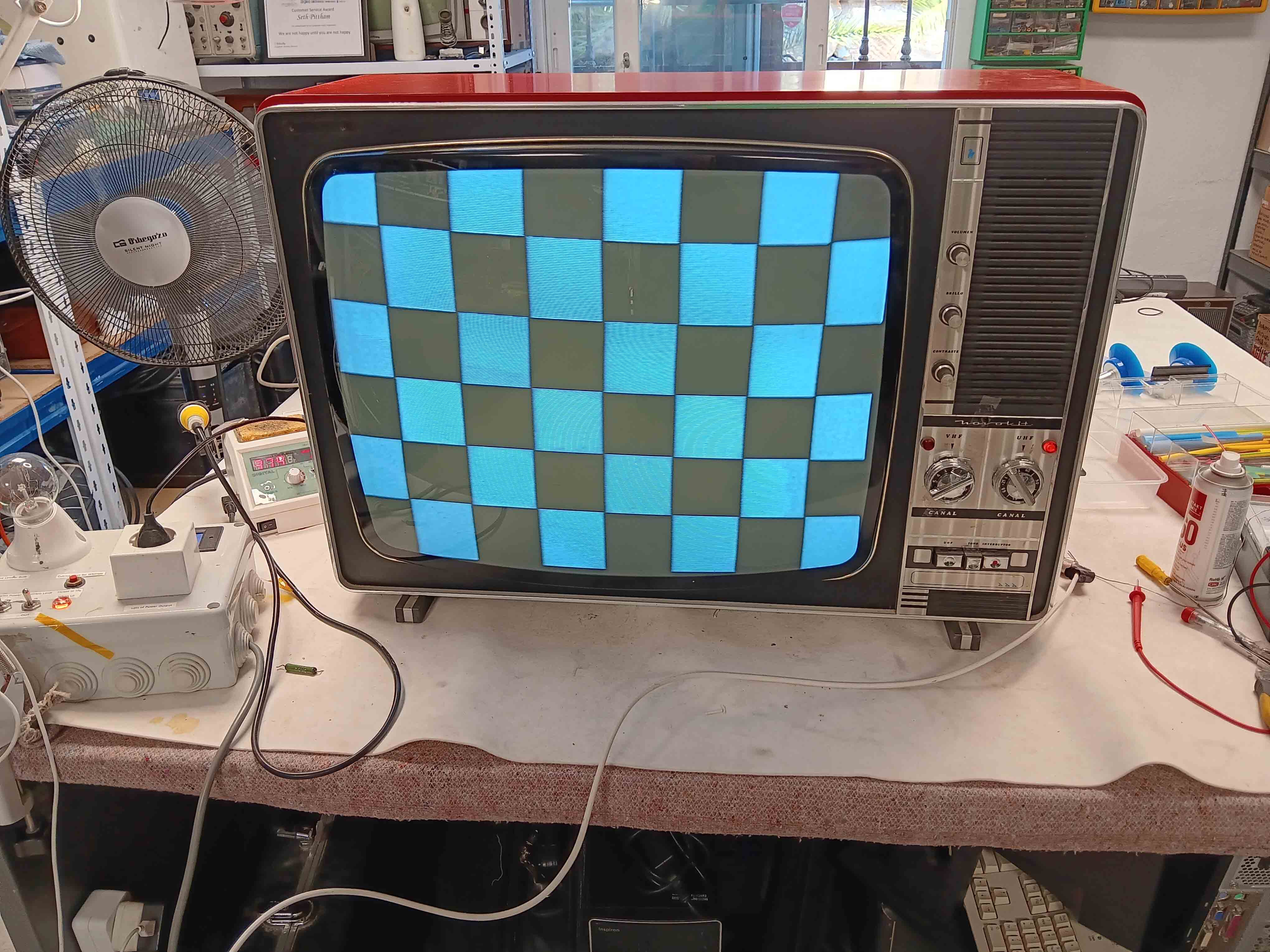
After a stressful day struggling with FM broadcast transmitter repairs and having my skills tested too much, I felt that I needed something warm and comforting to work on. Something to take me back to my very much younger days of repairing things. So, I turned to a recently acquired 24” black and white TV donated to me. I got my security blanket from the cupboard and loaded my pipe with my favorite tobacco. This set dates back to the early ‘70s I guess. I have not seen this Spanish make before and to be honest, I am not sure what it is. Novakit? I hope some of my Spanish friends will be able to identify it. And, after a few messages to various restorers, I found out that these sets were sold as kits. You could buy the parts when and as you had the money and assemble it yourself!
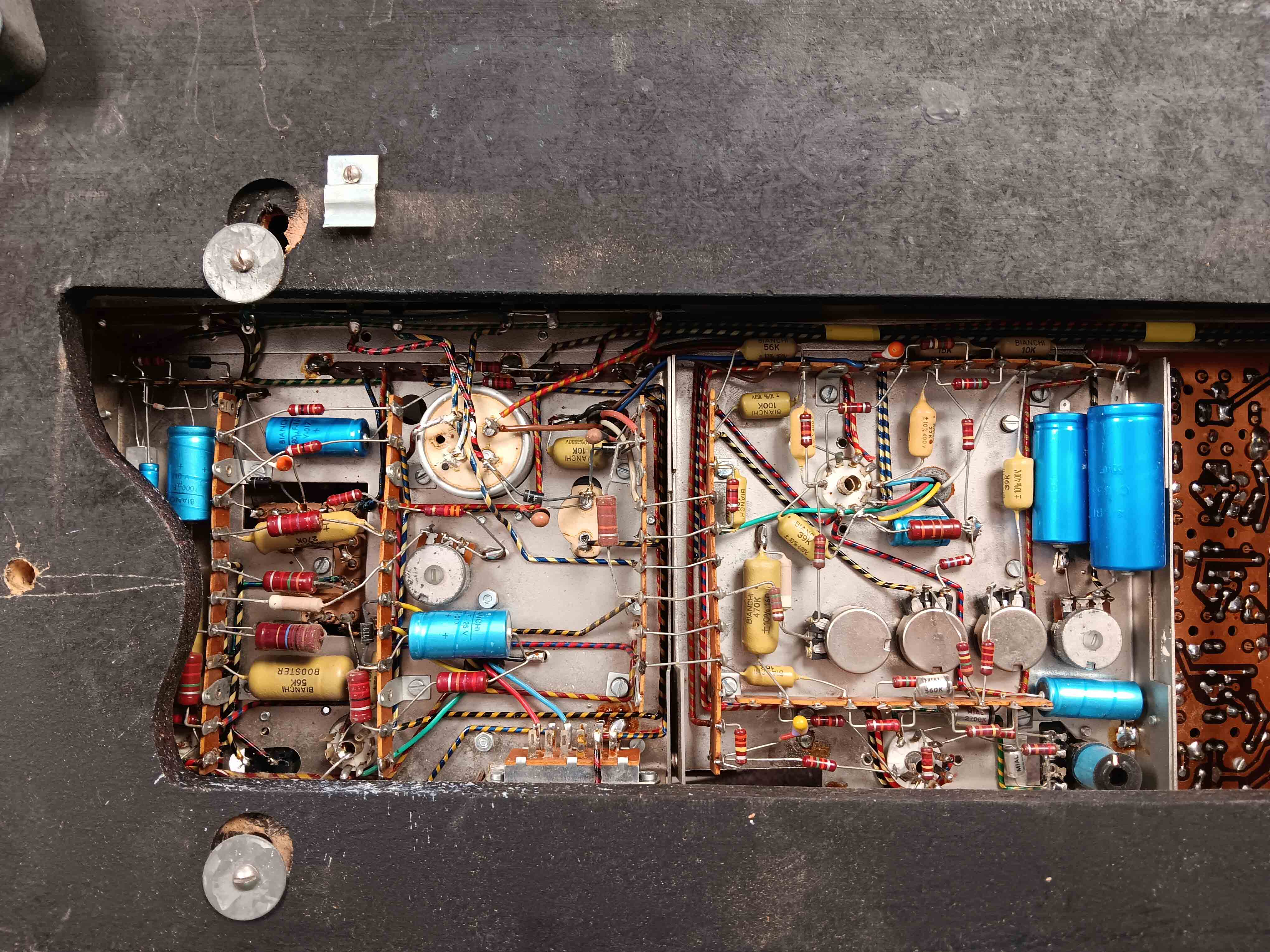
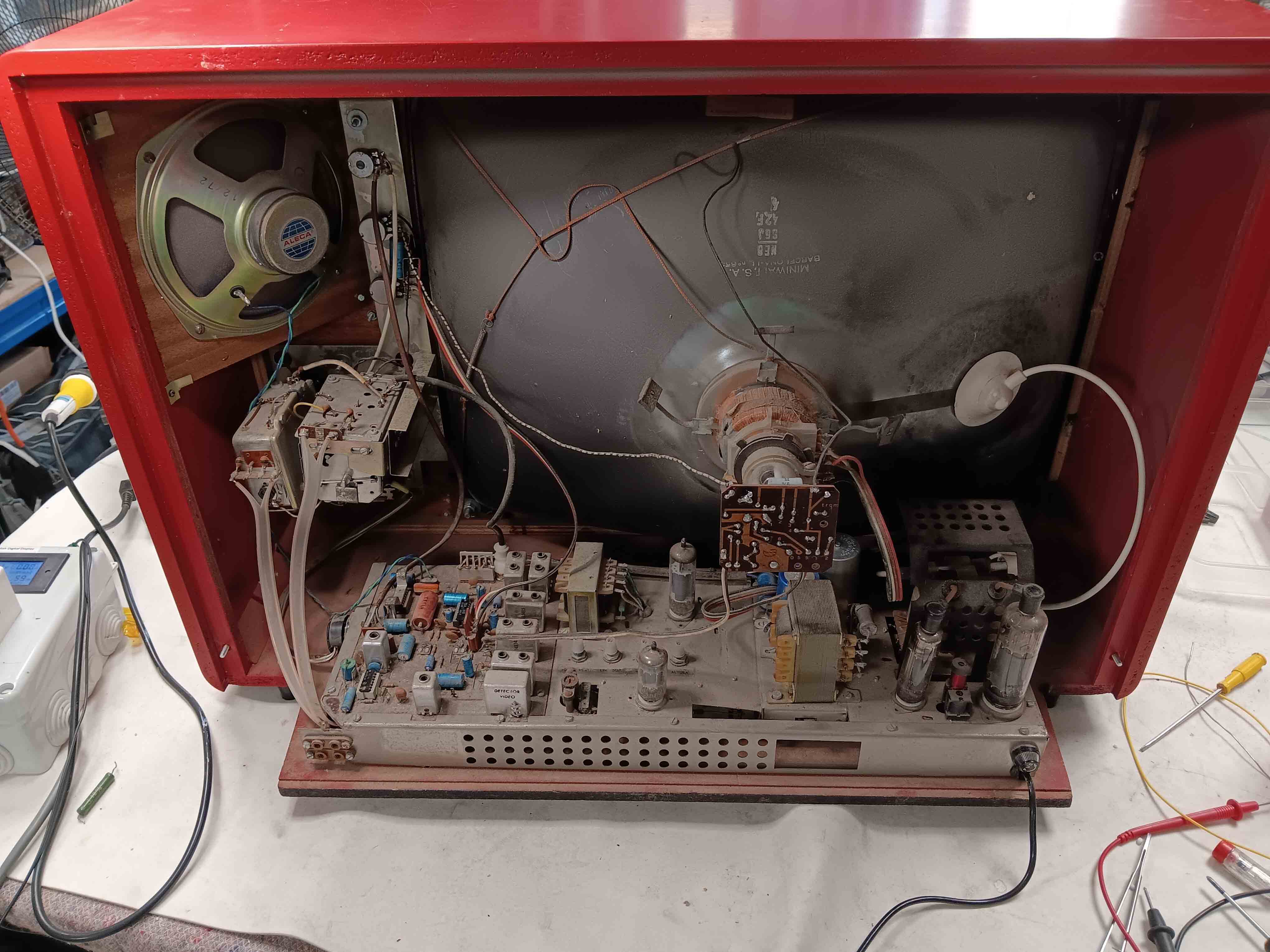
The thing that struck me about the TV was the fine build quality. A hybrid TV, valves for the line output, frame output. The rest sat on a PCB with all the solid state stuff. As usual with Spanish TVs, the audio section is always good. This has a large loudspeaker with tone controls. Components used are all good quality resistors and mustard Mullard type capacitors. I searched for diagrams for the set but found nothing. The wiring was lovely, beautifully laid out. This set would have been expensive. So, back to old school repair work.
Visual checks were all okay and I reformed the HT smoothing block capacitor, four-in-one can. It was not great, but thought I would give it a chance. These sets are 625 lines, but have UHF and VHF tuners. Slowly bringing the power up gave me a crackle on the audio and eventually a small size but bright raster. At least the CRT was in good shape. Mains supply in Spain in the ‘70s was generally 120V so the TVs were a mix of mains transformers and droppers.
Now the set was on, I could get a feel for the problems. Uncontrollable bright raster, no contrast or brightness control, no audio, apart from a slight hiss, no change in static conditions when the tuners were selected. Ummm, started to wonder why I had bothered. At that point, the main smoothing block decided to vomit and smoke the workshop out.
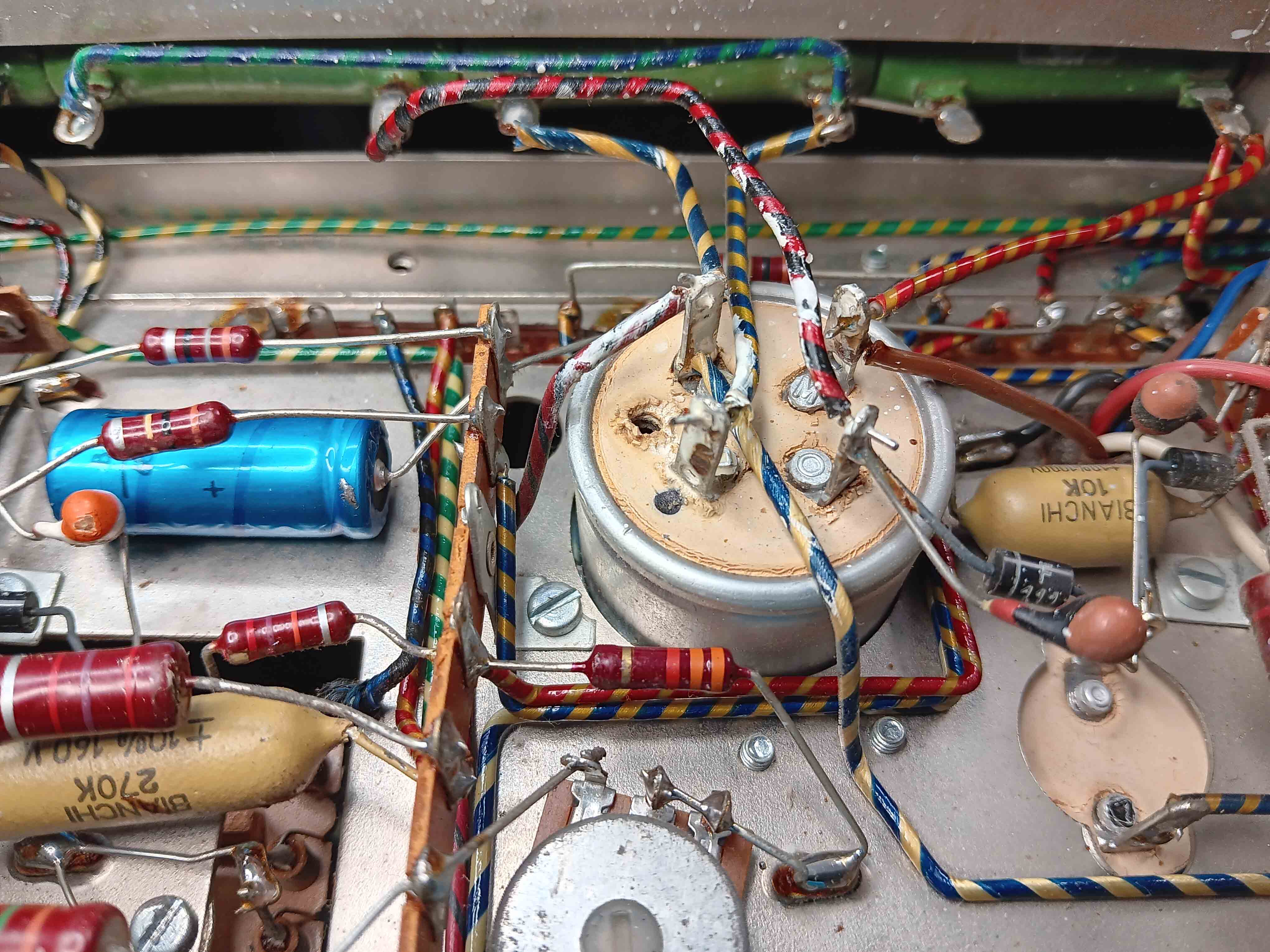
So, here we go. I had a few N.O.S multi block capacitor cans, but was not in the mood to waste time to reform them. So, fitted individual modern replacements. We now were back to the start. There seemed to be no I.F, audio, or video signals anywhere. Having no information, I decided to have a look around the video I.C. TBA890. There should have been 12V at pin one, but nothing. Hoping the I.C. was not duff, removed it (sockets fitted), but the same. Tracing the wiring, showed that the supply seemed to come from the line output stage. From what I could see, there was a series regulator arrangement using a Zener, germanium transistor and a few other bits. Several Philips type electrolytic capacitors were leaky so were replaced. Same fault. I turned to the Germanium transistor, which was bolted to the chassis in a heatsink block. All the pins were leaking to its case, suggested it had reached puberty and grown whiskers internally. Isolating it from the chassis gave me the 12v required. I refitted the transistor using a plastic screw, mica washer and heatsink paste. All good. Now I had a lot of audio and the raster jumped about when I operated the tuner selector. But, still no video content.
Using my trusted index finger, I found that the video output transistor on the tube base was cold. The 5.6K load resistor was open circuit. The resistor was changed along with the transistor which was leaky. Also, the tubebase PCB had spark gaps etched into the print and these were filthy. All cleaned up, try again. Now I had controllable contrast and brightness. A pattern generator was connected to the VHF tuner and after setting up the line and frame holds, I got a good picture. The UHF tuner was not working, but that was down to me, breaking a wire off during disassembly. Totally irresponsible!
Now all seemed to be good. Run the set for an hour or so and apart from a bit of corona around the EHT rectifier, all was fine.
The TV is a very stylish, lovely design. A bit like the RBM sets of the late ‘60s, with the shiny blue and red cabinets. Very pleased with the outcome and a strong CRT (Miniwatt – Barcelona, so, Philips). In this area or Spain, Andalucía, in the ’60s-‘70s, there was little money, so a purchase of a TV was a massive investment. They would have been used on “high days” and kept in the best rooms. Thankfully, these sets generally have low hours of use. Many thanks to one of the Guardia Civil who gave the set to me. It’s a treasure. The TV will probably out live me!